Callum rescues Sephy from the Dundale bombing
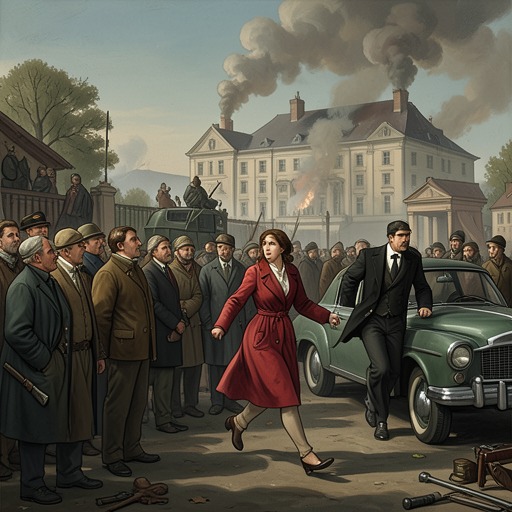
Noughts & CrossesCallum rescues Sephy from the Dundale Shopping Centre bombing in a sudden turn from an ordinary afternoon of shopping to a race for survival. He finds her in the café, recognizes the danger before she does, and drags her out; moments after they reach the open air, the centre explodes. Their escape saves them from the blast’s immediate force, but a recording of it later becomes evidence in the prosecution surrounding the bombing.
The warning in the café
Sephy has spent five long hours shopping with her mother, irritated by the endless requests for her opinion on shoes and relieved when her mother returns to the car park with her purchases. Sephy is taking a break with orange juice in the café when Callum appears. His first words are an urgent demand that she get out, but she greets him with a smile and asks where he came from. The gap between her ease and his alarm establishes how differently they understand the moment: Sephy sees an unexpected reunion; Callum sees immediate danger.
When Sephy looks closely, she recognizes that Callum is not merely worried but terrified. He gives her no explanation before ordering her to move, and when she asks what is happening, he pulls her from her seat and heads for the café door. A stranger asks whether the boy is troubling her as Callum drags her past his table. The question briefly casts the rescue as an apparent threat: from outside their relationship, his forceful intervention can look like an assault rather than an attempt to save her.
Flight from the shopping centre
Callum keeps urging Sephy forward, and the two run for the nearest exit. People around them begin looking about, frowning, and then racing toward the exits as well. Sephy cannot tell whether they have noticed the pair and followed their lead or whether the alarm has already sent the crowd into motion. She and Callum are among the first to get out of Dundale, stumbling into the spring sunshine with his hand still holding hers.
Outside, Sephy asks where they are going, but Callum can only tell her to run. He says it took him almost half an hour to find her. The detail makes the rescue more than a chance encounter: he has been searching through the centre, and his arrival comes after an anxious delay. Sephy eventually pulls her hand free and tells him he has done enough, but the warning comes too late for the danger to remain only an alarm or a hurried escape.
The explosion and its immediate aftermath
A flash makes it seem as if the air itself has caught fire; a fraction of a second later, an enormous boom throws Sephy off her feet. She lands face down, stunned, with intense heat at her back and a ringing in her ears that she first fears may be permanent. For a time she cannot tell whether she is dead. When the ringing stops, she turns and sees smoke billowing from the shopping centre. The brief quiet gives way to screams and sirens as panic overtakes the scene.
Callum is lying stunned beside her. The rescue has got them outside before the explosion, but it has not placed them beyond its reach: Sephy is blown into the air, and both are left disoriented in the blast’s immediate aftermath. The scene’s decisive reversal is from ordinary shopping and a welcome break to bodily shock, smoke, and alarm. Callum’s fear, which Sephy initially cannot understand, proves to have been an accurate response to a lethal threat.
The recording and the later case
The rescue later appears on the shopping centre’s surveillance tape during Callum’s court proceedings. In the footage, Callum leaves the café pulling Sephy behind him; although the recording captures no conversation, his effort to get her out is visible. The shopping centre alarm seems to sound as Sephy looks around in confusion, after which Callum pulls her toward an exit and the pair run. The recording then skips ahead for a couple of minutes: a white flash comes from the café, and the tape goes dark.
That visual sequence preserves the crucial contrast between Callum’s conduct and the accusation directed at his family. On the tape, he appears to be trying to save Sephy, not to cause the bombing. Yet the court uses the same footage in questioning that challenges whether Callum or anyone in his family knew about the bomb. The silence of the recording cannot establish what was said or what Callum knew; it shows his actions, while the prosecution frames those actions within the case against the family. The rescue therefore carries two consequences: it gets Sephy out of the centre before the blast, and it becomes part of the public record through which Callum’s conduct and his family’s alleged connection to the bombing are judged.
Significance
The event turns on a sharp difference in knowledge. Sephy is still caught in the frustrations of shopping when Callum reaches her; he has already understood that she must leave at once. His fear passes into action before he can explain it, and her initial questions and resistance give way to running only under the pressure of his insistence. The scene lets bodily urgency outrun explanation: a held hand, a hurried exit, a flash, and the force of the blast carry the turn from safety to danger.
The later surveillance footage changes the scene’s function without changing what it shows. In the moment, Callum’s actions are a rescue witnessed by Sephy and the people fleeing Dundale; in court, they become evidence examined amid suspicion of his family. The footage offers a clear image of him pulling her away, but its missing sound and sudden darkness leave questions that the image alone cannot answer. The same act can thus testify to his care for Sephy while remaining entangled in the case that threatens his family.